Ocean freight to Toronto.
Ocean imports into Toronto and the GTA, with rail connections, customs coordination and container delivery arranged together.
Explore the service details
Setara Logistics is a freight forwarder in Vaughan, Ontario that books LCL and FCL ocean freight into Toronto and the GTA. Toronto is inland, so a container usually lands at a coastal port and finishes the trip by rail and truck. We book that chain as one file and coordinate customs through a licensed customs broker partner.
Whether you bring in a few pallets a quarter or a container a week, the Toronto end follows the same path: port, rail, ramp or warehouse, customs, then your dock. Here is how each piece works, and where cost and delay come from.
How containers get from the port to Toronto
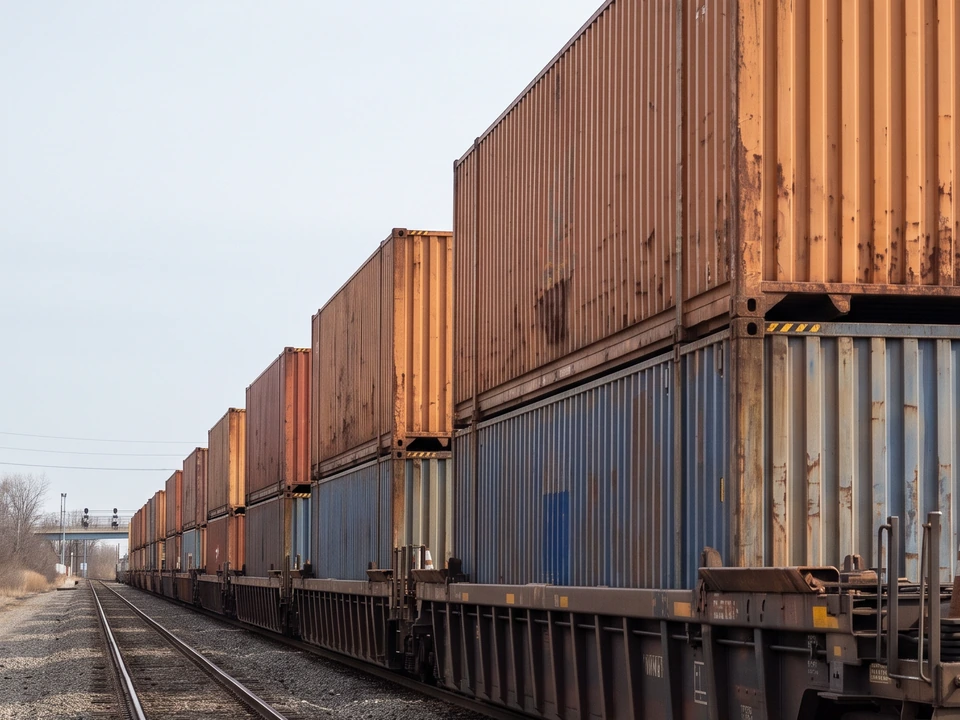
Containers for the GTA usually arrive through the port of Vancouver, Prince Rupert, Montreal or Halifax. CN or CPKC rail carries them inland to the GTA ramps at CN Brampton and CPKC Vaughan, and a truck takes the last leg to your door. Some cargo routes through US ports instead, which can be an option on certain lanes.
The ocean carrier's routing decides the port and the ramp. What you control is the paperwork. A container cannot leave the ramp until the carrier has released it and customs has cleared it, and free time runs while it waits. Our guide to the GTA rail ramps explains what happens at CN Brampton and CPKC Vaughan.
Should you ship LCL or FCL into Toronto?
Full container load (FCL)
You book the whole container. FCL for the GTA is often booked to the inland rail ramp on a through bill of lading, so one carrier contract covers the sea and the rail. From the ramp, Setara Transport, our group’s carrier, runs the container drayage to your dock.
Request an FCL quoteLess than container load (LCL)
Cargo that does not fill a container is consolidated at origin by an LCL consolidator and shipped in a shared box. At this end it is unloaded at the consolidator's container freight station (CFS), near the port or in the GTA. After customs release, a vetted partner carrier delivers it. We book LCL with consolidators; we do not run a CFS.
Request an LCL quoteLCL is priced by volume or weight, whichever is greater, and adds CFS charges at this end. As volume grows, a full container can cost the same or less and skips the shared unloading. Our container load calculator shows how much of a box your pallets fill.
What happens between booking and your dock?
01Book
You send the origin, commodity, volume and weight. We confirm LCL or FCL and book the sailing or the consolidator.
02Advance data
Before the cargo reaches Canada, the carrier and the forwarder that issues the house bill send their cargo data to the CBSA under eManifest.
03Customs
Our customs broker partner files your entry, ideally before the cargo is available.
04Delivery
FCL moves from the ramp to your dock. LCL leaves the CFS with a vetted partner carrier. We track both to delivery.
What do you need to clear customs in Toronto?
You are the importer of record, so the account side has to be ready before the first shipment lands. Entries are filed by our customs broker partner, and duties and GST are paid through the customs entry.
Under CARM, release before payment needs financial security posted in your own name. Without it, you pay duties and taxes before the CBSA releases each shipment. Our guides to CARM and CARM financial security explain both in plain terms, and our customs clearance page covers how we coordinate the entry.
What will it cost, and how long will it take?
Charges at the Toronto end
Depending on the Incoterm and the routing, expect some of these:
- Terminal handling
- CFS or devanning charges, for LCL
- Delivery order or documentation fees
- Rail and ramp charges
- Customs entry fee
- Duties and taxes
- Drayage or delivery to your door
- Storage, demurrage or detention if the container sits past its free time
What drives cost and transit time
There is no single rate or transit time for Toronto. These move both:
- Origin port and vessel schedule
- Transshipment on the way
- Season
- Volume and weight
- Rail availability to the GTA
- Customs holds
- How fast the CFS unloads, for LCL
- How fast you answer questions
Ask us to quote the destination charges with the freight, so the landed cost is clear before you book.
Ocean freight into Toronto FAQ.
Can I ship LCL into Toronto?
Yes. LCL is the usual choice when your cargo does not fill a container. A consolidator loads it into a shared container at origin, and at this end unloads it at a container freight station near the port or in the GTA. After customs release, a vetted partner carrier delivers it. We book the consolidator, coordinate customs and track the delivery.
Do I need a customs broker?
Canada lets importers file their own entries, but most use a licensed customs broker. We coordinate every entry through our customs broker partner. You still need your own business number with an import-export (RM) account and a CARM Client Portal account. See do I need a customs broker.
Who pays destination charges?
It depends on the Incoterm on your purchase order. Under EXW, FCA or FOB, you pay the ocean freight and the destination charges. Under CFR or CIF, the seller pays the ocean freight, but charges after arrival usually still fall to you. Under DAP, you pay customs clearance, duties and taxes; under DDP, the seller pays those too. Our Incoterms picker shows each term.
Which GTA rail ramp will my container use?
Usually CN Brampton or CPKC Vaughan, depending on which railway carries it inland. The ocean carrier's routing decides that, not the importer. Knowing the ramp tells you where the drayage leg starts.
Who runs the drayage from the ramp to my dock?
For FCL railed to CN Brampton or CPKC Vaughan, Setara Transport runs the drayage to GTA docks. If a container is trucked from a port instead, or the shipment is LCL, a vetted partner carrier makes the delivery. We book and track it either way.
How long does ocean freight to Toronto take?
It depends on the routing: origin port, sailing, transshipment, the rail leg, customs and, for LCL, the CFS. We do not publish a generic transit time. When you book, you get the schedule for your routing.
Related services, guides and tools.
Bringing freight into Toronto by sea?
Send us the details and we'll come back with a firm rate.
Request a quote Talk to a logistics specialist